

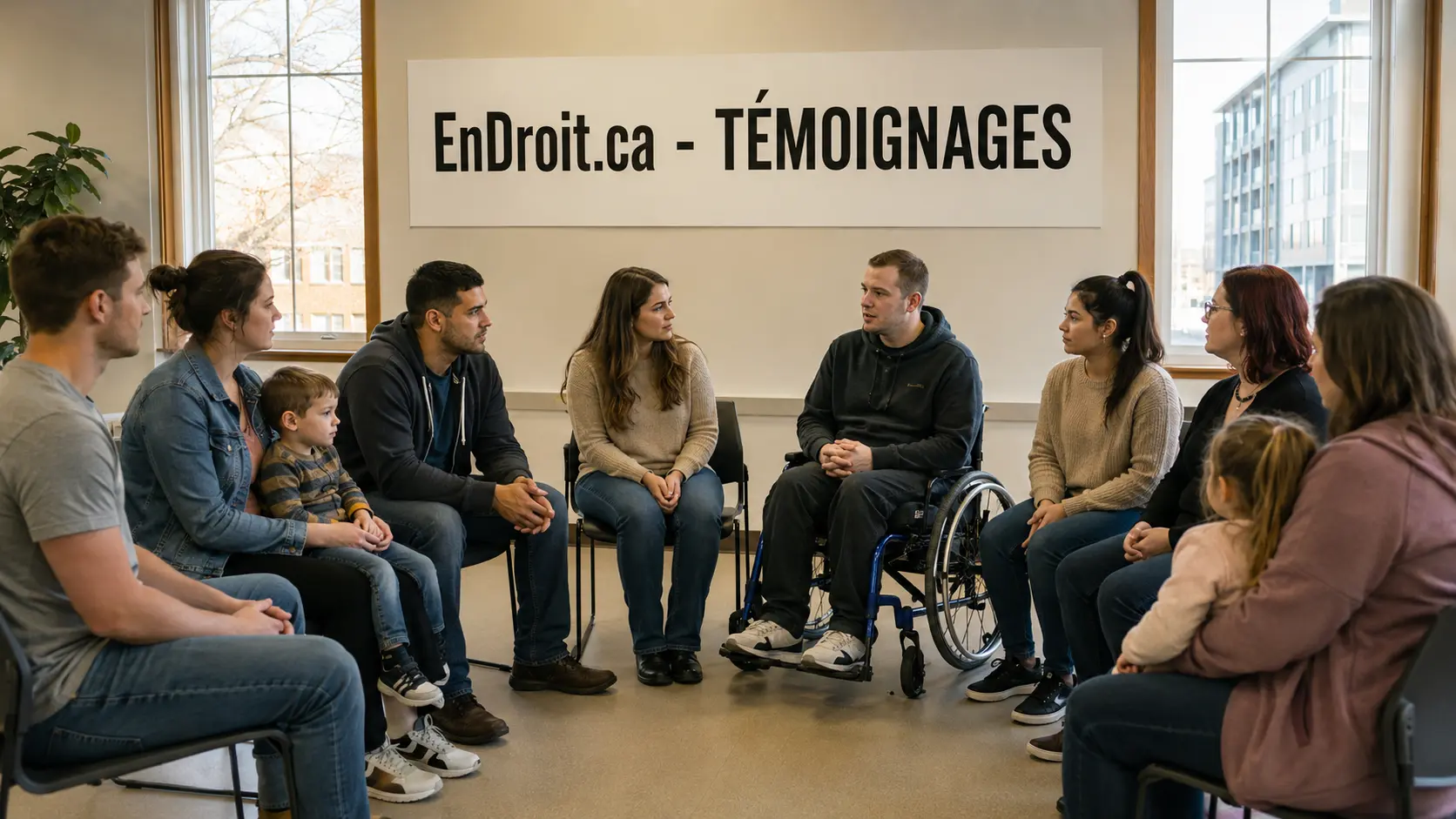


Four hours and twenty minutes of questions on August 11, and not a single announcement. Ten days later, body-worn cameras and a by-law against insulting police officers. In between, the one measure that would have changed anything — a moratorium on street checks — was dismissed with a flat « no ». Alain Babineau, a former RCMP staff sergeant, points out that in Nova Scotia the same question was settled in six months.
Alain Babineau
Director, Racial Profiling and Public Safety, Red Coalition · Former Staff Sergeant, Royal Canadian Mounted Police (1989-2016) · Former recruiter and investigative team manager
Two meetings, ten days apart, and one conclusion: this was not a dialogue.
On August 11, Montréal’s Public Security Commission held an extraordinary public meeting so that citizens could question SPVM Chief Fady Dagher about allegations of racism at Neighbourhood Station 39 in Montréal-Nord. Ten days later, on August 21, Mayor Soraya Martinez-Ferrada announced two measures: the deployment of body-worn cameras for 3,500 officers, and a new municipal by-law criminalizing « insults » directed at City employees — read: at police officers. Two meetings, ten days apart, one conclusion: this was not a dialogue. It was a conversation with the deaf.
A four-hour-and-twenty-minute evening that announced nothing
The August 11 format at least had the merit of existing. Chief Dagher showed up and absorbed four hours and twenty minutes of questions, a minute and a half at a time. He deserves credit for holding the room, something none of his predecessors had done with such consistency. But by the end of the evening, he admitted it himself: no announcement. See you in November, at the Commission, for a « co-constructed » plan. In other words: come back in three months and we might tell you something.

On substance, the chief did not move an inch. What happened at Station 39, he says, is the work of a « subculture » that developed within one of the station’s seven teams, by three individuals — not sixteen — who « knowingly » committed acts of « pure racism ». He is careful to distinguish that deliberate racism from systemic racial profiling, which he acknowledges exists, which he says he has been a victim of himself, and which he admits — rarely heard from a police chief — to having practised himself.
It is a convenient distinction. It does not survive the facts. Station 39 did not fall from the sky. Letters denouncing similar conduct were sent at least fifteen years ago, to the SPVM and to the Montréal-Nord borough administration. Photographs of young people injured during interventions have been circulating just as long. The SPVM has produced a stack of anti-racism action plans over the past twenty-five years. Every time, the same refrain: it is not that serious, it will sort itself out, we are working on it. Presenting Station 39 as an isolated accident erases a pattern that has been repeating for decades — and that does not stop at the borders of Montréal-Nord.
The moratorium no one would consider
That is the missed opportunity of August 11. Chief Dagher could have announced a temporary moratorium on street checks, long enough to obtain an independent legal opinion from a retired judge with no ties to the parties. He could even have covered himself with the union by recalling that it had already blocked a comparable reform three years ago — and that nothing has changed since. He did not. He said no.
This is not a hypothetical precedent. It is exactly the path taken in Nova Scotia: in April 2019, the province’s Justice Minister ordered street checks suspended province-wide, pending an independent legal opinion. Six months later, former Nova Scotia Court of Appeal Chief Justice Michael MacDonald concluded that the practice had no basis in law and was illegal.
The moratorium led to a permanent ban.
Nothing prevented Montréal from doing the same. Street checks are an internal SPVM policy — the chief did not need political authorization to act. While he answered with a blunt « no », city councillor Dimitrios (Jim) Beis merely promised that the administration would « look into the question ». After years of reports, studies and testimony on the disproportionate effects of street checks on Black and racialized people — documented notably in the Armony-Hassaoui-Mulone report (2019) — what is needed is no longer consultation. It is a clear legal answer to a single question: how far can the police lawfully go?
The Superior Court, and then the Québec Court of Appeal, in Luamba, have already ruled that section 636 of the Highway Safety Code — a provision that exists elsewhere in the country without causing problems — infringes sections 9 and 15 of the Canadian Charter of Rights and Freedoms and cannot be justified under section 1. In other words: the constitutional test has already been run, twice, and random stops failed it both times. Only the Supreme Court’s final word is missing — it heard the case in January 2026 and its judgment is under reserve. It is precisely this kind of test, conducted by an independent court rather than deferred from one consultation to the next, that an opinion modelled on the Nova Scotia exercise would apply to all street check practices still in force.
Bad apples and the NRA
Chief Dagher explains what went wrong at Station 39 by the conduct of a few individuals — « bad apples » — rather than by the practice itself. It is a familiar line of reasoning, and columnist Émilie Nicolas captured it well in Le Devoir on August 13. Asked on Tuesday evening by criminologist Massimiliano Mulone about his refusal to impose a moratorium, Dagher defended street checks by comparing them to another « intermediate weapon », the taser: the problem would not be the tool, but the way it is used. Nicolas rightly notes that this is the very reasoning invoked by the American gun lobby after every mass shooting: it is never the weapon, it is the bad individuals using it. The logic is convenient in both cases, but it deserves to be followed to its conclusion: limiting access to a tool open to abuse also limits its abusive use by those same bad apples. And this is not the first time the SPVM has ignored that finding: its own expert committee, the one that included Mulone, issued a single recommendation in 2023 — a moratorium on street checks without cause. The chief still has not implemented it.
Changing an organizational culture, whether in policing or in America, is a long-term exercise. The victims who keep accumulating while we wait do not have the luxury of enduring the seven to ten years the chief invokes for a cultural shift.
August 21: good intentions, badly calibrated
Ten days after the August 11 meeting, the mayor announced the deployment of body-worn cameras for 3,500 officers within a year. The intention is commendable, and the administration deserves credit for not waiting for Québec’s green light. But the timeline does not hold up. A deployment of this scale first requires a privacy impact assessment, a data retention and disclosure policy, and genuine public and technical consultation — not a simple reference to the abandoned 2019 pilot project. Edmonton’s experience should serve as a warning: that police service deployed cameras, then grafted facial recognition capability onto them without prior consultation, a technology whose disproportionate racial bias has since been demonstrated. One year, a year and a half: that is unrealistic. Two years would already be optimistic.
The by-law on « insults »
As for the new by-law on « insults » directed at municipal employees, it will be used almost exclusively by police officers. The wording is broad enough to cover all City employees, but close attention will have to be paid to how officers use it. My concern: that this by-law becomes a cash cow for the City’s coffers, if it manages to collect its fines mostly from those who receive the most of them. Similar by-laws against incivility have already shown discriminatory enforcement against vulnerable communities elsewhere, and none has ever withstood serious judicial scrutiny. The case law on police-insult by-laws is, in itself, a repudiation: in St-Lin-Laurentides c. Blais (2015 QCCM 36) and in Laval c. Beaudin (2019 QCCM 166) — the latter involving a Black citizen stopped in circumstances the judge herself described as questionable — citizens were acquitted for words virtually identical to those that led to convictions in Lévis c. Cloutier Lachance (2011 QCCM 22) and in Québec c. Valiquette (2018 QCCM 309). In Beaudin, the judge invoked the Supreme Court’s decision in Switzman v. Elbling to recall that the right to criticize state authority is an essential component of democracy. Two courts of the same jurisdiction unable to agree on similar facts: that is the very definition of arbitrariness. And while these by-laws multiply in Montréal, a comparable municipal by-law — Saint-Jérôme’s, prohibiting homeless people from sleeping in public space — is currently the subject of a constitutional challenge before the Superior Court, on the ground that it infringes the rights to life, liberty and security guaranteed by the Charter. I see no reason why Montréal’s would escape the same fate.
Adding a parallel by-law to target citizens who are disrespectful toward police officers, without at the same time reviewing how that same standard applies to officers toward citizens — and without even questioning its validity under the Charter — is to give oneself a one-way tool.
The tool already exists: section 5 of the Code of ethics of Québec police officers already prohibits officers from being disrespectful or impolite toward anyone, from using obscene or abusive language, or from acting in a discriminatory manner.
What is good for one must be good for the other.
The Red Coalition invites anyone who believes they have been treated disrespectfully by a police officer to file a complaint under that same section 5.
Who is missing from the table
With the exception of Chief Dagher, none of the senior officers present at the August 11 meeting appeared to come from the communities most directly affected by the racial profiling associated with street checks. That may be the real problem. We multiply consultations, meetings and events — seven years, ten years of « cultural change » — without ever settling the underlying legal question. By continually postponing the decision, we are simply preparing the ground for the next crisis, the one that will recall the Villanueva case.
It is time to break out of the cycle of consultations without consequence.
A moratorium. An independent legal opinion. A clear decision on the lawfulness of the practice.
That is what would distinguish a genuine dialogue from a conversation with the deaf.
Editor’s note. The text above is an op-ed signed by Alain Babineau, reproduced in full and without modification. This is an English translation of the original French text published on August 24, 2026; in case of discrepancy, the French version prevails. The opinions and positions expressed are those of the author and do not engage EnDroit.ca. Only the standfirst and this note are from the editorial team.
State of the law. The author notes that the Luamba case is under reserve before the Supreme Court of Canada. That was accurate at the time of publication. A judgment may be rendered at any time and may alter the state of the law described in the text.
Presumption of innocence. To our knowledge, the Neighbourhood Station 39 officers targeted by the allegations reported in this text have not been the subject of any final ethics or judicial determination to date.
Not legal advice. This text does not constitute legal advice. The legislative provisions and judicial decisions cited are provided for general information only. Every particular situation must be assessed on its own terms.
Right of reply. Any person or institution named in this text may send us a response, which we undertake to publish. Write to endroit.ca@outlook.com.
Independence. EnDroit.ca is an independent citizen platform, unaffiliated with any political party, professional order, police service or government body.
Sources
Montréal Public Security Commission, extraordinary public meeting of August 11, 2026 · City of Montréal, announcements of August 21, 2026 · Nova Scotia, suspension of street checks (April 2019) and the report of former Chief Justice Michael MacDonald · Luamba, Superior Court and Québec Court of Appeal; case heard by the Supreme Court of Canada in January 2026, judgment under reserve · Highway Safety Code, s. 636 · Canadian Charter of Rights and Freedoms, ss. 1, 9 and 15 · Armony, Hassaoui and Mulone, report on street checks (2019) · St-Lin-Laurentides c. Blais, 2015 QCCM 36 · Laval c. Beaudin, 2019 QCCM 166 · Lévis c. Cloutier Lachance, 2011 QCCM 22 · Québec c. Valiquette, 2018 QCCM 309 · Switzman v. Elbling, [1957] S.C.R. 285 · Code of ethics of Québec police officers, s. 5 · Émilie Nicolas, Le Devoir, August 13, 2026.
Auteur/autrice

En savoir plus sur EnDroit.ca
Subscribe to get the latest posts sent to your email.