

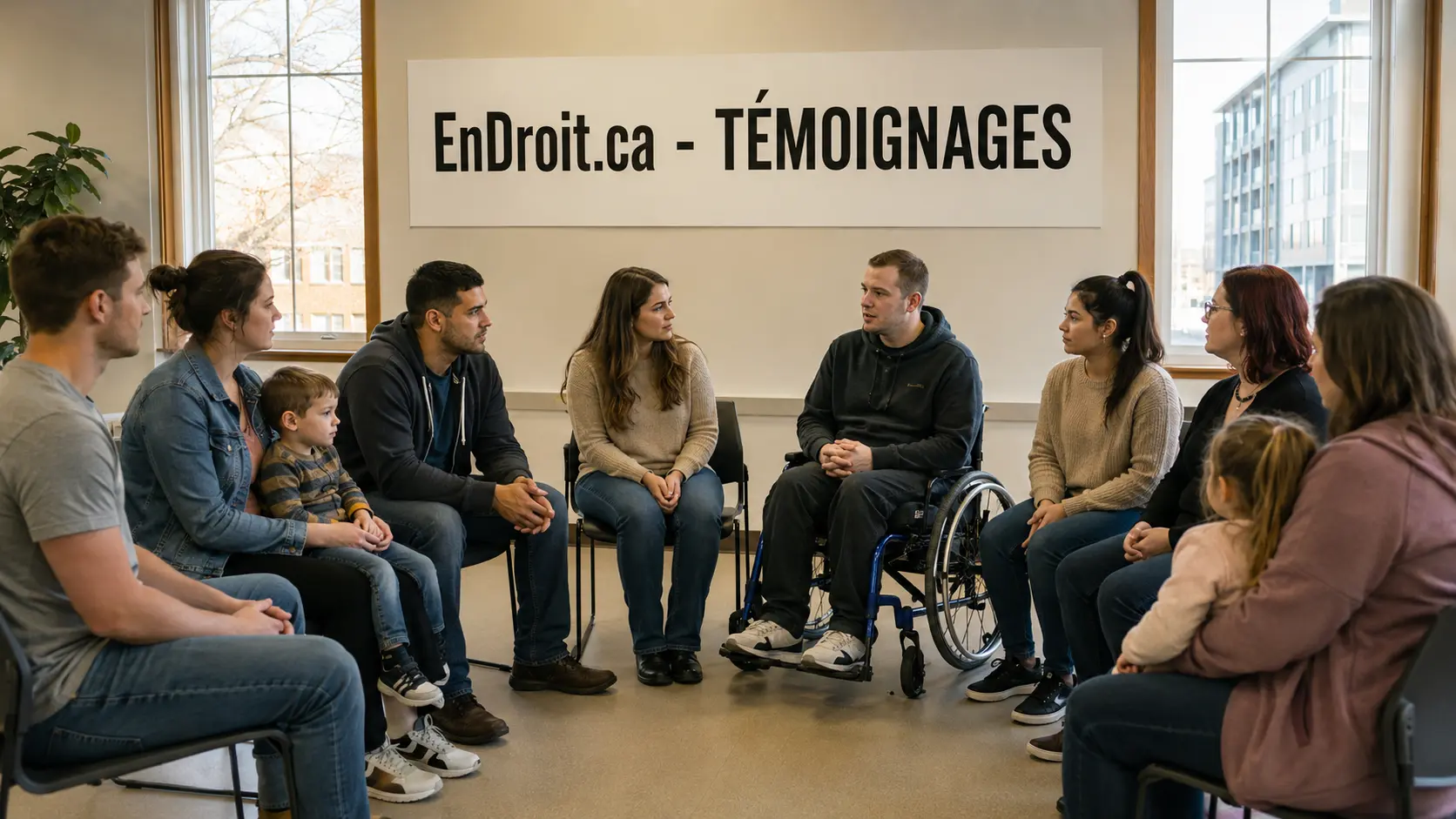


A father’s access to his three young children has been supervised for more than a year. Despite a favourable expert report and 92 supervised visits without a single incident, a judge refuses to lift the supervision. The Court of Appeal steps in — and recalls that a safeguard order is not meant to drag on.
In Droit de la famille — 26956, 2026 QCCA 890, the Court of Appeal of Quebec partly allows a father’s appeal and lifts part of the supervision of his access to his three children, aged 6, 4 and 2. The Court also reduces the duration of the safeguard order to a maximum of six months, rather than letting it run until trial.
Beyond this particular case, the ruling restates two principles that touch thousands of families: a judge who entirely sets aside the report of an expert he himself calls reliable must explain why, and a safeguard order should not, in principle, exceed six months.
One clarification is in order. This is a safeguard order — a provisional measure — and not the judgment on the merits, which is set for February 1–3, 2027. The decision is also anonymized by law: in family matters, no information may identify a party or a child (art. 16 C.C.P.). This article respects that rule.
I — The context

Supervision imposed, then months of effort
Shortly after the separation, in May 2025, a first judge grants parenting time to the mother and orders that the father’s access be supervised. The judge finds that the father never used physical violence against the mother or the children; but recordings made by the mother, between November 2024 and April 2025, reveal episodes of verbal violence. The father admits that this behaviour was unacceptable and begins seeing a psychologist. For the time being, supervision is deemed necessary.
A psychosocial assessment is ordered to determine the children’s interest. The parties jointly choose the expert, a psychologist. In his December 2025 report, he recommends a gradual lifting of supervision and a progressive widening of access. Above all, he warns that the children cannot remain in the « insecure ambivalence » created by the current contact, at the risk of a « polarizing and irreversible » situation of parental alienation, particularly for the eldest.
II — The paradox
A judge who praises the expert… then rejects him outright
In March 2026, the Superior Court judge hearing the father’s application describes the expert’s report as « very thorough » and says it « inspires confidence ». He acknowledges the father’s many efforts, notes that the supervision reports are positive, that the children are doing well and are happy to see their father. Then, despite all of this, he dismisses the application, finding that a change would be « premature », and renews the orders until the judgment on the merits.
In practical terms, this meant that the supervision, in place since May 2025, would have lasted nearly two years by the time of trial, in February 2027. In the meantime, the father had exercised his supervised access 92 times without any difficulty being reported, and had continued his psychological follow-up — from a single session at the outset to about thirty.
III — What the Court corrects
Errors that justify intervening
On appeal, the bar is high: a provisional order in family matters falls within a broad discretion, and the Court intervenes only exceptionally. But here, it finds that the order is tainted by errors.
First, the judgment does not explain why the judge entirely sets aside the recommendations of an expert he calls reliable, without even considering a partial lifting of the supervision. The Court sees in this a « hardly understandable about-face »: a judge is not bound by the expert, but if he departs from the report, his reasons must be able to withstand critical scrutiny.
Second, to justify his refusal, the judge relies on matters unrelated to the question: the disagreement over the family residence, the stress linked to the mortgage, or the father’s refusal to stop using the formal « vous » with the mother. These considerations, the Court notes, are not relevant to deciding whether to lift the supervision.
Taking into account a consideration that is not relevant to the decision to be made constitutes an error of law.
Finally, the judge relies largely on his colleagues’ 2025 conclusions, themselves based on the 2024–2025 recordings. Yet the evidence before him was contemporary and very different: it showed that the father had seriously turned his life around, that all the supervision reports confirmed his parenting capacity, and that the expert considered lifting the supervision to be in the children’s interest.
IV — The six-month rule
A safeguard order is not meant to drag on
The Court restates an important principle: a safeguard order dealing with custody and access should not, in principle, exceed six months (art. 158 para. 8 C.C.P.). A longer duration remains possible in particular cases, but the reasons must then explain why. Here, the order contained no such explanation — and the mother herself acknowledged that its duration was puzzling, proposing that it be reduced to six months. The Court accepts that proposal.
A safeguard order is a provisional measure, granted quickly to address the most urgent issues while awaiting trial. It is temporary, can be revised if circumstances change, and does not bind the trial judge. That is why it should not, in principle, stretch beyond six months: it exists to manage an emergency, not to settle a child’s custody once and for all.
Conclusion
A balance, in the children’s interest
The Court lifts the supervision of the father’s access on Mondays and Wednesdays, but maintains it for the Saturday access, this time in the presence of the paternal grandfather — who is present in the children’s lives and to whom they are attached. The order is valid until September 25, 2026. The Court is careful not to go further: no full weekend with an overnight stay for now, so as not to prejudge the coming trial.
At its core, the ruling illustrates a simple idea: a child’s interest also means not being frozen in a situation that has become unfair once reality has changed. An emergency measure, even one justified at the outset, must be reassessed in light of what is actually happening — not renewed out of habit.
Need help? Anyone affected by conjugal violence can reach SOS violence conjugale, free and confidential, 24/7: 1 800 363-9010 · sosviolenceconjugale.ca.
EnDroit.ca · The law, closer to citizens
Anonymity — family matter. The law prohibits publishing any information that could identify a party or a child in a family proceeding (art. 16 C.C.P.). The ruling is anonymized; EnDroit.ca respects this rule and publishes no identifying information.
Editorial note. This article is an editorial analysis based on a public ruling of the Court of Appeal of Quebec, published on CanLII. It concerns a safeguard order (a provisional measure), not the judgment on the merits, expected in 2027. EnDroit.ca is an independent legal-journalism platform. This article does not constitute legal advice. The author is not a lawyer.
Sources and references
Primary source. Droit de la famille — 26956, 2026 QCCA 890, file no. 500-09-032031-262 (on appeal from file 700-04-035436-259). Court of Appeal of Quebec, sitting in Montreal. Panel: the Honourable Michel Beaupré, Lori Renée Weitzman and Andres C. Garin, JJ.A. Hearing: June 19, 2026; judgment: June 26, 2026.
Decision under appeal. Safeguard order of March 27, 2026 (Superior Court, the Honourable Paul Mayer), renewing orders made in May and August 2025. Trial on the merits set for February 1–3, 2027.
Legal references. Code of Civil Procedure, art. 16 (anonymity in family matters), art. 158 para. 8 (duration of case-management measures) and art. 340 para. 2 (legal costs); Civil Code of Québec, art. 612 (review of decisions concerning children). On the standard of intervention: Droit de la famille — 142188, 2014 QCCA 1604 (Bich, J.A.).
Counsel. For the appellant: Me Jeffry Awwad and Me Ana Maria Zuluaga (Therrien Couture Joli-Cœur). For the respondent: Me Julie Lavoie (PFD Avocats).
This article is an editorial analysis based on a public ruling of the Court of Appeal of Quebec. EnDroit.ca is an independent legal-journalism platform. This article does not constitute legal advice. The author is not a lawyer.
Auteur/autrice

En savoir plus sur EnDroit.ca
Subscribe to get the latest posts sent to your email.